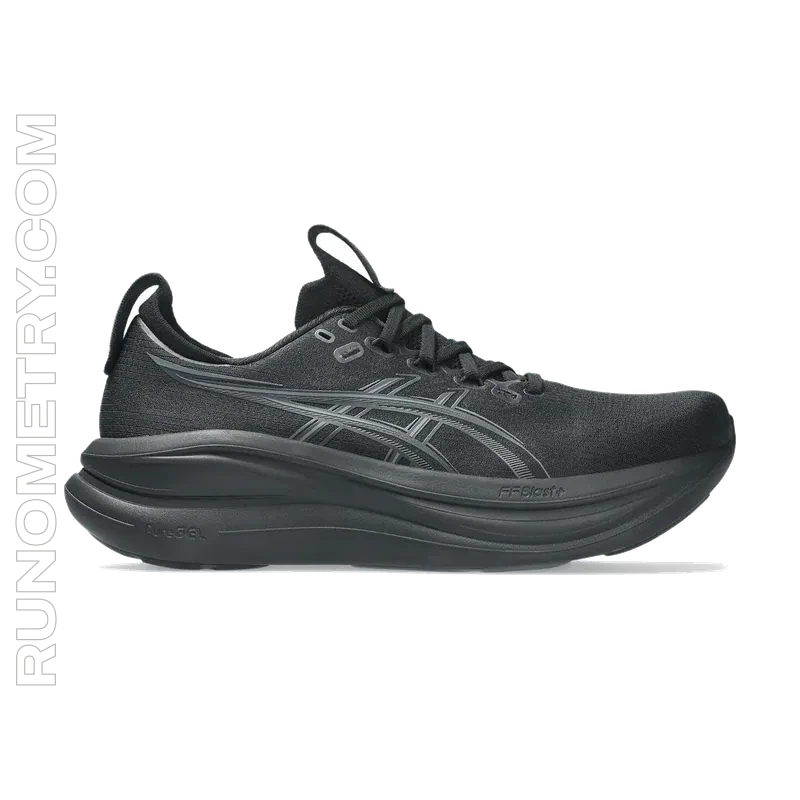
Running shoe stack height: definition and the catalogue’s values
What a running shoe's stack is, how heel and forefoot stack relate to the drop, and how thick the soles of the catalogue's models are.
Published Oct 17, 2026
The stack is the thickness of the sole between your foot and the ground: everything under the foot, midsole and outsole. Brands publish it at the heel and at the forefoot; the gap between the two is the drop.
What a thicker sole changes
- More stack means more foam under the foot: more protection on long runs, and often a livelier ride with today's foams.
- Less stack keeps the foot closer to the ground: more feel for the terrain, more stability in corners and on trails.
- A high stack is not a guarantee of softness: the foam and the geometry matter as much as the height.
The heel stacks of the catalogue
Heel stacks in the catalogue
931 models with a published value, rounded to the millimetre. A row leads to its page when there is one.
- under 25 mm60 · 6%
- 25 mm to 29 mm130 · 14%
- 30 mm to 34 mm255 · 27%
- 35 mm to 39 mm314 · 34%
- 40 mm and more172 · 18%
The thickest soles have their own page: high stack running shoes. For protection on long and recovery runs, see the max cushion running shoes.
How to read a stack on a spec sheet
- Compare heel with heel and forefoot with forefoot: brands do not always measure the same point.
- Look at the drop too: a high stack with a low drop and a high stack with a high drop do not feel the same.
- Each shoe page shows its stack as the brand publishes it, and the comparator lines up two shoes on the same rows.